Psoriasis Is NOT Contagious: How to Take Control of the Disease and Get Your Life Back


“Doctor, did I catch psoriasis from someone?”
This is one of the most common questions I hear in my clinic.
Many patients become frightened when they notice thick red patches covered with silvery scales on their elbows, knees, scalp, or even across large areas of their body. Some avoid social situations because they worry that others might think they have a contagious skin disease.
The truth is:
Psoriasis is NOT contagious.
You cannot catch psoriasis from touching someone, sharing personal items, swimming in the same pool, or being in close contact with a person who has the condition.
Psoriasis is a chronic inflammatory skin disease driven by an overactive immune system, influenced by both genetic and environmental factors.
And while there is currently no permanent cure, modern treatments have advanced dramatically. Many patients can achieve near-complete skin clearance and enjoy a normal, active life.
What Causes Psoriasis?

The short answer is:
An overactive immune system causes skin cells to grow too quickly.
Normally, skin cells take about 28–30 days to mature and shed.
In psoriasis, immune signals mistakenly tell the skin to produce new cells much faster—sometimes in as little as 3–7 days.
As a result, skin cells accumulate on the surface faster than they can be shed, leading to:
- Thickened skin plaques
- Red, inflamed patches
- Silvery-white scales
- Itching and irritation
Common Psoriasis Triggers
Although genetics play a role, many factors can trigger flare-ups.
Stress
Stress is one of the most common triggers.
Many patients notice worsening symptoms during periods of:
- Work-related stress
- Sleep deprivation
- Emotional distress
- Major life changes
Infections
Particularly streptococcal throat infections, which can trigger guttate psoriasis.
Certain Medications
Examples include:
- Lithium
- Beta-blockers
- Certain antimalarial medications
Skin Injury
Cuts, scratches, tattoos, burns, and repeated friction may trigger psoriasis lesions in susceptible individuals.
What Are the Symptoms of Psoriasis?
Psoriasis can appear in several forms.

1. Plaque Psoriasis
The most common type.
Symptoms include:
- Thick red patches
- Silvery scales
- Dry, cracked skin
- Itching or burning sensations
Common locations:
- Elbows
- Knees
- Lower back
- Scalp
2. Scalp Psoriasis
Often mistaken for severe dandruff.
Patients may experience:
- Thick scales
- Persistent itching
- Scaling that extends beyond the hairline
3. Nail Psoriasis
Up to 50% of psoriasis patients may develop nail involvement.
Signs include:
- Small pits in the nails
- Nail thickening
- Separation of the nail from the nail bed
4. Guttate Psoriasis
More common in children and young adults.
Characterized by:
- Numerous small drop-like lesions
- Sudden onset after infection
5. Psoriatic Arthritis
Psoriasis is not always limited to the skin.
Some patients develop joint inflammation, known as Psoriatic Arthritis.
Symptoms include:
- Joint pain
- Swollen fingers or toes
- Morning stiffness
- Reduced mobility
Early diagnosis is important because untreated inflammation can lead to permanent joint damage.
Can Psoriasis Be Cured?
This is perhaps the most frequently asked question in dermatology clinics.
The honest answer is:
There is currently no permanent cure for psoriasis.
However, that does not mean patients must live with active disease forever.
Modern treatment goals include:
- Clearing skin lesions
- Reducing inflammation
- Preventing flare-ups
- Improving quality of life
- Protecting long-term health
Today, many patients can achieve clear or almost-clear skin for extended periods.
Topical Treatments for Psoriasis

Topical Corticosteroids
These help reduce:
- Redness
- Scaling
- Itching
- Inflammation
They are highly effective but should be used under medical supervision.
Vitamin D Analogues
Examples include calcipotriol.
These medications help regulate abnormal skin cell growth and are often combined with topical steroids.
Calcineurin Inhibitors
Useful for sensitive areas such as:
- Face
- Eyelids
- Armpits
- Groin
Where long-term steroid use may not be ideal.
Moisturizers
While not a treatment by themselves, moisturizers are extremely important.
They help:
- Restore the skin barrier
- Reduce itching
- Improve comfort
- Minimize cracking
What If Topical Treatments Are Not Enough?
Moderate-to-severe psoriasis often requires more advanced treatment options.
Phototherapy (Narrowband UVB)
Controlled ultraviolet light therapy can significantly reduce inflammation and improve symptoms.
Oral Medications
Examples include:
- Methotrexate
- Cyclosporine
- Acitretin
These medications can be highly effective but require regular monitoring.
The Modern Era of Psoriasis Treatment: Biologic Therapy
Over the past decade, biologic medications have transformed psoriasis treatment.
Biologics target specific inflammatory pathways involved in psoriasis, including:
- TNF-alpha
- IL-17
- IL-23
Unlike older treatments that broadly suppress the immune system, biologics work with greater precision.
As a result, many patients experience:
- Dramatic skin improvement
- Long-term disease control
- Better quality of life
- Near-complete or complete skin clearance
For many patients, biologics have been life-changing.
A Real Patient Story from My Clinic
One of the most memorable psoriasis cases I have treated involved a working professional who had struggled with the disease for many years.
When he first visited my clinic, he had extensive psoriasis affecting:
- Scalp
- Arms
- Legs
- Trunk
He had previously tried multiple treatments, including topical medications and systemic therapies, but his symptoms repeatedly returned.
What affected him most was not the itching.
It was the impact on his confidence.
He told me:
- He avoided wearing short-sleeved shirts.
- He felt uncomfortable at swimming pools.
- People often assumed his condition was contagious.
- He constantly worried about others staring at his skin.
After a thorough evaluation and screening process, we decided that biologic therapy was the most appropriate option.
Over the following months, his psoriasis plaques gradually faded.
The thick scales disappeared.
His skin returned to an almost normal appearance.
At one follow-up visit, he smiled and said:
“Doctor, I can finally wear short sleeves again.”
To many people, that may sound like a simple statement.
To someone who has lived with psoriasis for years, it represents freedom, confidence, and a return to normal life.
Of course, every patient responds differently, and treatment outcomes vary. However, this case highlights how dramatically psoriasis care has improved in recent years.
Clinical Results at 22 Square Clinic
Real Patient – Before & After Biologic Therapy
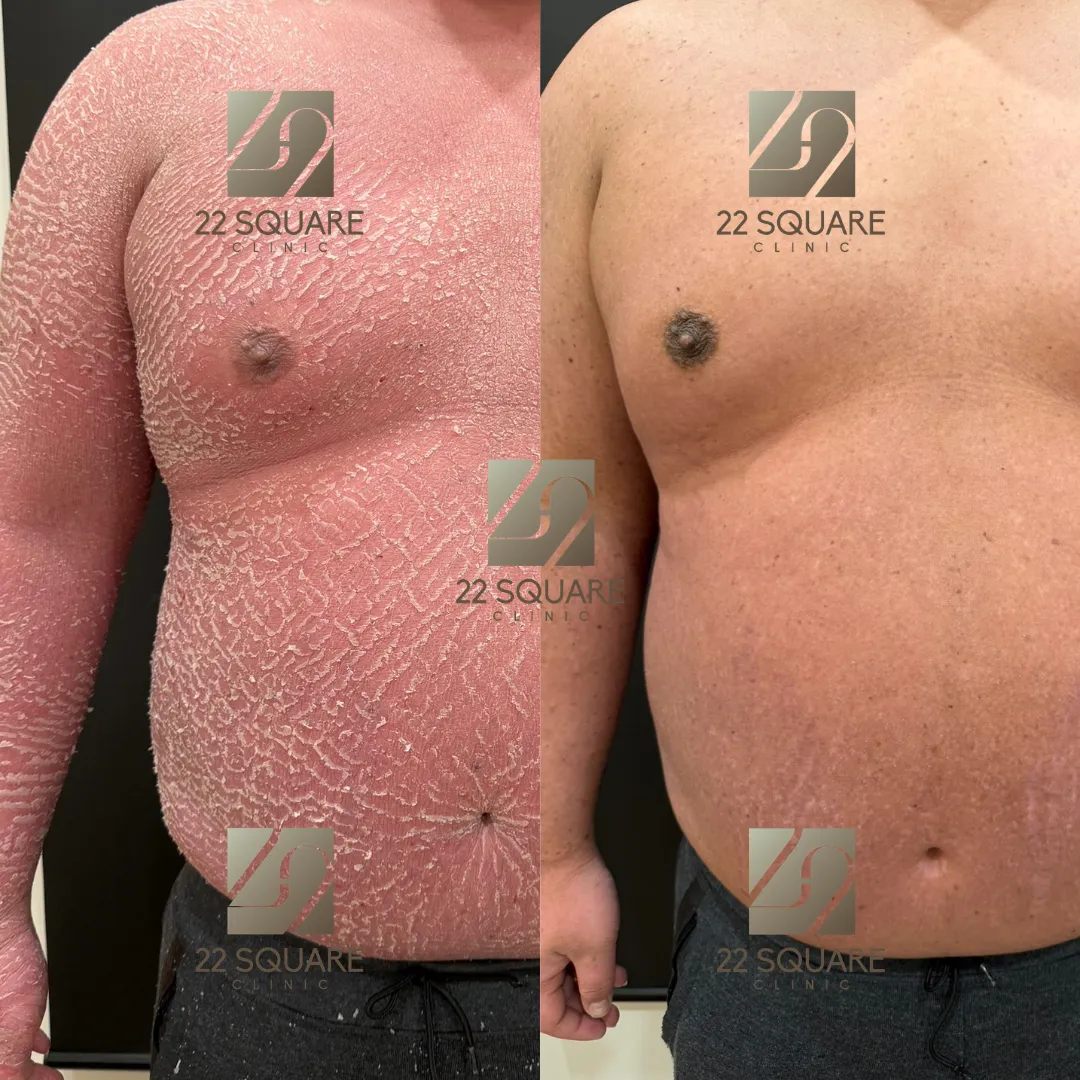
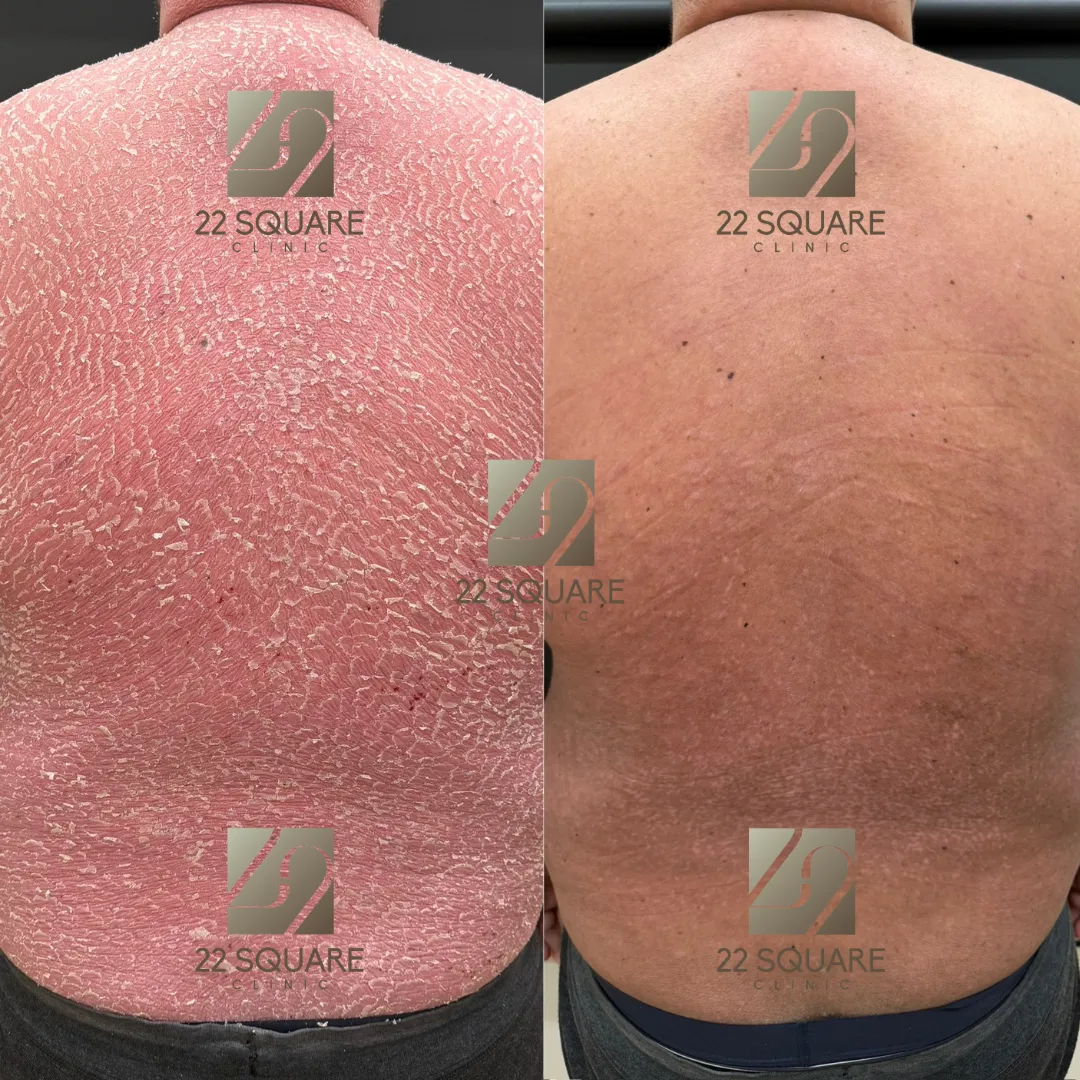
- Duration of disease: 10+ years
- Previous treatments: Topical therapy + oral medications
- Biologic treatment duration: 2 months
- Outcome: Near-complete skin clearance
Disclaimer: Individual results may vary depending on disease severity, medical history, and treatment response.
Psoriasis Is More Than a Skin Disease
Many people are surprised to learn that psoriasis is associated with systemic inflammation.
Patients with psoriasis may have increased risks of:
- Psoriatic arthritis
- Obesity
- Type 2 diabetes
- High blood pressure
- Cardiovascular disease
This is why modern psoriasis management focuses not only on clearing the skin, but also on improving overall health.
Lifestyle Tips for Psoriasis Patients
✔ Moisturize regularly
✔ Avoid scratching lesions
✔ Maintain a healthy weight
✔ Get adequate sleep
✔ Manage stress effectively
✔ Stop smoking
✔ Limit alcohol consumption
✔ Follow up with your dermatologist regularly
Frequently Asked Questions
Is psoriasis contagious?
Can psoriasis be cured permanently?
Is psoriasis dangerous?
Can psoriasis affect only the scalp?
Will I need treatment forever?
A Final Message from Dr. Bank
If there is one thing I hope you remember from this article, it is this:
Psoriasis is not contagious, and no patient should ever feel ashamed of having it.
Modern dermatology has come a long way. From topical treatments and phototherapy to advanced biologic medications, we now have powerful tools to help patients regain control of their disease and their confidence.
If you have persistent red, scaly patches or suspect that you may have psoriasis, seeking an early evaluation can make a significant difference.
The sooner treatment begins, the sooner you can take back control of your skin—and your life.