Deep Dive into “Sensitive Skin”: Or Are You Actually Suffering from a Skin Disease?

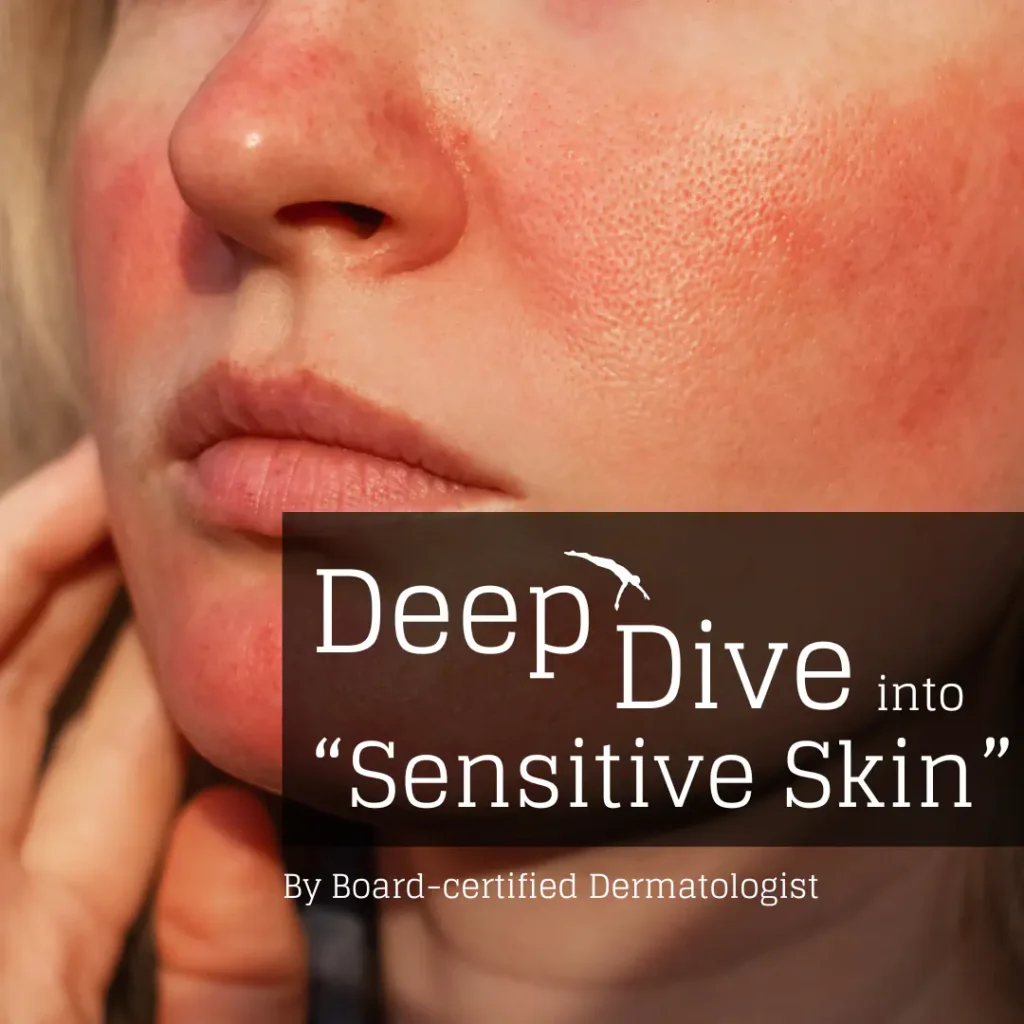
Hello everyone, I’m Dr. Bank. Today, I’d like to bring up a topic that many people have consulted me about, and it’s a problem that severely drains your confidence in daily life: “Sensitive Skin” (Sensitive Skin Syndrome). Many people walk into my clinic feeling discouraged, saying they are allergic to everything they use, their face is constantly red, itchy, flaky, and peeling. No matter how they treat it, it never completely heals. Even after switching through dozens of cream brands, the results remain the same. I want to tell you that sometimes, what you are experiencing might not just be ordinary “sensitive skin.” It could be a skin disease that requires proper care from a specialized dermatologist.
Today, I am going to explain this to you in deep detail. Once you finish reading, you will thoroughly understand your own skin’s mechanism, just like we are having a long chat in my consultation room. We will uncover what diseases are hiding behind the term sensitive skin, such as Rosacea and Seborrheic Dermatitis (Sebderm). What exactly are they, how does each medication work, what does proper skincare really entail, and how can we handle them to restore our skin’s long-lasting strength?
1. Getting to Know the Enemy: Sensitive Skin Syndrome is Not Just a Coincidence
Having sensitive skin doesn’t just mean your skin stings when applying cream. However, medically speaking, we find that the skin structure, or “Skin Barrier,” of people in this group is inherently weak from the start. The skin cells are not tightly packed, causing the skin to lose water easily. This allows irritants, pollution, or external pathogens to easily penetrate and trigger inflammation more than in normal people. There are two main diseases that I frequently encounter, which are often misunderstood as acne or simply cream allergies.
Rosacea
This disease is a chronic abnormality of inflammation and blood vessels on the face. It is increasingly found in Thai people, especially those aged 30 and above.
Rosacea

This disease is a chronic abnormality of inflammation and blood vessels on the face. It is increasingly found in Thai people, especially those aged 30 and above.
- Disease Mechanism: It is very complex. It occurs because the blood vessels under the skin are overly sensitive to stimuli (Vascular hyper-reactivity)—they dilate easily but are hard to constrict. This is coupled with an overactive skin immune system. Another key culprit is the “Demodex mite,” which is a mite that lives on everyone’s face, but people with Rosacea have a significantly higher amount of these mites than normal, which triggers inflammation.
- Noticeable Symptoms: The face flushes very easily. Exposure to the sun, eating spicy food, or even slight embarrassment makes the face bright red, and the redness lasts longer than in other people. Some people have broken capillaries on their cheeks or nose, or develop red bumps and pus-filled bumps resembling acne in the center of the face. (The key observation is that there are no comedones or blackheads/whiteheads; this is the main point distinguishing it from general acne).
Seborrheic Dermatitis (Sebderm)

Many people simply call it “Sebderm disease.” This disease is very common; whenever the weather changes or you get stressed, the rash appears.
- Disease Mechanism: It is caused by inflammation of the skin in areas with a dense population of sebaceous glands. This happens alongside an abnormal immune response to a type of yeast that naturally lives on our skin called Malassezia. When we are stressed, lack sleep, or our immune system drops, the composition of facial oils changes. This allows this yeast to thrive, digest the oils, and release free fatty acids that cause our skin to become irritated and inflamed.
- Noticeable Symptoms: It presents as a red, flaky rash with slightly yellowish, greasy scales. It usually appears around the folds of the nose, the inner eyebrows, the hairline, behind the ears, or in various skin folds. These rashes will be itchy, especially when sweating or during extremely hot or dry weather.
2. Impact on Quality of Life
I truly understand how every patient feels. These diseases don’t just damage the skin, but they massively consume your daily happiness.
- Loss of Confidence: Many people do not dare to take off their masks or leave the house bare-faced because their face is constantly red or has dandruff-like flakes. Makeup doesn’t sit well, applying foundation makes the flakes more visible, and sometimes applying makeup even worsens the allergic reaction.
- Physical Suffering: There is a burning sensation like being scalded by fire when exposed to the sun (in Rosacea) or an irritating itchiness that disrupts your concentration at work (in Sebderm), which takes a toll on mental health.
- Wasted Money and Time: You buy expensive counter-brand creams to try one by one, hoping for a cure, only to find out you’re allergic to all of them. It’s a waste of money and leaves your face worse than before.
- Accumulated Stress: The more stressed you are, the more the disease flares up. When the disease flares up, you become even more stressed… turning into a hellish cycle with no way out. I’ve encountered some cases where patients became depressed, withdrew themselves, and didn’t want to socialize at all.
3. Checklist: Quick Self-Check, Are You Experiencing These Diseases?
Try to observe yourself. If you have more than 2-3 of these symptoms, I recom
Rosacea Checklist:
- Your face flushes very easily when exposed to heat, sun, hot/spicy food, or exercise.
- Facial redness lingers for a long time and does not easily fade away like in normal people.
- You can clearly see tiny, branching blood vessels on your cheeks or nose.
- There are red bumps or acne-like pus bumps in the center of the face that peel and sting, but cannot be popped and have no comedones.
- Applying any skincare product makes your skin feel stinging, tingling, and hot, even with gentle formulas.
Sebderm Checklist:
- You have red, flaky rashes, usually in the center of the face (T-Zone), sides of the nose, inner eyebrows, hairline, or behind the ears.
- The flakes are not just dry and white, but often appear greasy and slightly yellowish.
- You experience itchiness, especially during hot weather, when sweating, or in very dry winters.
- Symptoms come and go and tend to flare up severely when you lack sleep, work hard, or are highly stressed.
A Warning from Me: If your answer is “Yes,” I recommend you… “stop trying to figure it out on your own.” Buying topical medications yourself at the pharmacy, especially Steroids, will make the rash subside very quickly at first, and your face will look magically clear. However, with continuous use, your skin will gradually thin out, your skin’s immunity will be compromised, capillaries will become more visible, and once the medication wears off, the rash will flare up many times worse than before. This is called “Topical Steroid Addiction,” which is very difficult and time-consuming to fix.
4. Deep Dive into Medical Guideline Treatments
We will treat according to international dermatological standards by selecting medications that match the “disease mechanism” at each stage. Each medication has a specific function as follows:
Medications for Rosacea
The goal is to reduce inflammation, kill Demodex mites, and manage blood vessels.
- Topical Ivermectin (1% Cream): This is a Game Changer for people with pus-filled bumps from Rosacea. It is an anti-parasitic drug that effectively targets “Demodex” mites on the face, and it also contains anti-inflammatory properties (will be imported to Thailand very soon).
- Topical Metronidazole (0.75% or 1%): This is a topical antibiotic, but we use it because it has anti-inflammatory effects. It reduces redness and inflammatory bumps well with minimal irritation.
- Topical Azelaic Acid (15% Gel or 20% Cream): A natural acid that helps reduce inflammation, decrease microbial activity, and provides mild skin exfoliation, effectively reducing red and pus-filled bumps.
- Vasoconstrictor Topical Drugs (Brimonidine or Oxymetazoline): Applied to temporarily reduce redness. They work by shrinking dilated capillaries, making them suitable for use before important events, but they do not treat the root cause.
- Oral Doxycycline (Sub-antimicrobial dose): An oral tetracycline drug typically used to kill bacteria. However, for Rosacea, I prescribe it in a “low dose” (e.g., 40 mg slow-release). This dose will not kill the good bacteria in the intestines but will instead inhibit the enzymes that cause skin inflammation. It is safe for long-term use to control symptoms.
- Oral Isotretinoin: There is recent research indicating that taking low-dose vitamin A derivatives continuously for 3-6 months can prevent disease flare-ups, reduce sebaceous gland activity, and improve inflammation.
Medications for Seborrheic Dermatitis (Sebderm)
The goal is to reduce the amount of Malassezia yeast and reduce skin inflammation.
- Topical Antifungals (e.g., Ketoconazole 2% cream, Ciclopirox): Antifungal/anti-yeast medications applied to the rash to reduce Malassezia yeast, cutting off the disease cycle from the start.
- Topical Corticosteroids (Mild strength): I will consider using these only during severe flare-ups with acute inflammation. I will choose the lowest potency and prescribe it for a short period (no more than 1-2 weeks) just to put out the active fire. You must absolutely not buy and use this continuously on your own.
- Topical Calcineurin Inhibitors (e.g., Tacrolimus ointment, Pimecrolimus cream): These are “steroid-sparing agents” (anti-inflammatory drugs without steroids). I usually use this as the main medication for long-term symptom control. It can be applied continuously to the face, is safe, and does not cause skin thinning.
5. Proper Skincare Routine
No matter how good the medication is or how expensive the laser treatment is, if you go home and wash your face incorrectly or use creams that damage your skin, your skin will still be ruined. Taking care of your Skin Barrier is the most important foundation.
Step 1: Cleansing
- Throw away bar soaps and squeaky-clean foams: It is recommended to use cleansers in the Syndet (Synthetic Detergent) group or gentle formula cleansers with a pH of 5.5, which is close to the skin’s pH.
- Texture: It should be a gel, milk, or lotion texture with no foam or very little foam (SLS/SLES Free).
- Strict Prohibitions: Never use hot or very warm water to wash your face because it will dilate blood vessels and cause facial redness. Do not use facial scrubs, and absolutely do not use cleansing brushes or machines. Just use your fingers to rub gently and pat your face dry with a soft towel.
Step 2: Moisturizing and Repairing the Skin
- Ingredients to look for: Choose a moisturizer that focuses on Barrier Repair and helps retain water. Examples include ingredients like Ceramides, Cholesterol, Free Fatty Acids, or soothing anti-inflammatory agents like Niacinamide, Panthenol, and Centella Asiatica.
- Things to avoid: While the skin is not yet strong, I advise avoiding all types of skin exfoliation. Avoid AHAs, BHAs, Retinol/Retinoids, high-concentration Vitamin C, Fragrance, Alcohol, and Essential Oils.
Step 3: Sun Protection
Sunlight (UV) is the number 1 trigger for people with Rosacea.
- Choose Physical (Mineral) Sunscreen: I recommend using sunscreens containing Zinc Oxide or Titanium Dioxide. These act like a mirror reflecting sunlight away and do not absorb into the skin, thus causing less irritation than Chemical types.
- Correct amount: Apply an amount equal to two finger lengths. If you must go out in strong sun, you should carry an umbrella and wear a wide-brimmed hat to reduce the heat hitting your face directly.
6. Trigger Avoidance
Sensitive Skin diseases are like having a hidden “detonate button” on our face. We need to find that button and try not to press it. I often ask patients to keep a Trigger Diary, noting down what they did on the days their rash flared up.
Popular triggers you should watch out for:
- Weather Conditions: Strong sunlight, extreme heat, and extremely cold and dry weather.
- Food and Beverages: Spicy/hot food, fermented items, alcoholic beverages (especially red wine), and extremely hot drinks.
- Mental State: “Stress and sleep deprivation” are the worst enemies of all skin diseases. The body will release cortisol hormone, which stimulates the sebaceous glands to work harder, compromises the immune system, and instantly triggers a disease flare-up.
7. Elevating Treatment: Restoring Strength from Within with Regenerative Science
Everything I have mentioned above is about “supporting and controlling the disease” from the outside, which is a fundamental necessity. However, for anyone who has had a “chronic disease” that comes and goes for many years, I want you to look deeper into the “deep skin structures.”

The treatment that provides long-lasting results and allows patients to return to a normal life is tackling the root cause using deep-level technology (Regenerative Medicine).
- Blood Vessel Management and Inflammation Reduction with DermaV Laser
For those with Rosacea, redness, or chronic skin inflammation, the DermaV Laser is another one of my great helpers.
- DermaV is a laser that excellently targets the hemoglobin pigment in red blood cells under the skin. It releases thermal energy to destroy and collapse abnormal capillary walls without harming the upper skin layer, breaking the “facial redness” cycle at its root.
- It features an intelligent cooling system (Cryogen cooling) that sprays cool gas to protect the upper skin layer before and after every laser shot. This makes it very safe for people with highly sensitive skin. After the treatment, the face is not ruined, there are no scabs, and no recovery time is needed.
- DNA-Level Skin Cell Restoration with Polynucleotides (PN)
Polynucleotide (PN) is an extract from wild salmon DNA, which is pure and very similar to human DNA.
- When injected into the skin, this substance acts like “premium fertilizer” that goes down to stimulate fibroblasts to wake up, work, and repair themselves from the DNA level.
- It has properties that greatly help reduce skin inflammation (Potent Anti-inflammatory effect). It stimulates the creation of new collagen, increases the formation of healthy new blood vessels, improves the structural support of blood vessels, thickens the skin, and makes it less easily sensitive than before.
- Moisture Balancing and Skin Remodeling with Hyaluronic Acid (HA – e.g., Profhilo)
People with broken skin barriers tend to lose water very easily. Injecting hybrid molecule Hyaluronic Acid (Profhilo) steps in to plug these leaks.
- The medication naturally disperses and seeps into the skin layers to draw in and retain moisture from the inside (Internal Hydration), as if we embedded a moisturizer under the skin.
- It aids in Bioremodeling, which stimulates the complete reorganization of collagen and elastin structures throughout the system.
- When the skin is fully hydrated from within, the outer Skin Barrier will become dense and strong again. Irritants cannot penetrate, and the flaky peeling skin will disappear.
“Combining these 3 treatments is the true science of restoring the skin from within. It is not just treating the symptoms at the endpoint, but creating a new environment for the skin. This results in previously frequent flare-ups calming down, the skin becoming stronger, and the disease being controlled for much longer, which has been life-changing for many patients.”
8. Conclusion: Why Should You Care for Your Skin With Us?
For anyone who has a chronic disease, has suffered for a long time, and wants to be cured or wants to manage the disease correctly without stressing every morning while looking in the mirror, I recommend coming to see a specialized dermatologist. Because at our clinic, “we are different.” We are not just a general beauty clinic, but you are cared for by a “Board-Certified Dermatologist.” We have expertise in deeply analyzing skin problems. We select medications and follow internationally standardized treatment Guidelines, and we have World-Class laser technology ready to restore your skin to its strength.
I, Dr. Bank, want to tell everyone experiencing sensitive skin problems that “ruined skin can bounce back and become strong again, as long as we treat it at the right spot, for the right disease, and with the right method.” If anyone has questions or wants me to evaluate your skin and plan a Personalized Treatment, feel free to message and book a consultation with me at the clinic. I am happy to take care of you and ready to help everyone regain their confidence, smile at the sunlight, and live life happily to the fullest once again.
See you at the clinic, everyone!