What People with Sensitive Skin Might Not Know. | 22 Square Clinic


Hello everyone, I’m Dr. Bank. Today, I want to address a topic that so many of you have reached out to ask me about a skin concern that can truly take a toll on your confidence and daily life: Sensitive Skin Syndrome.
Many patients walk into my clinic feeling frustrated and discouraged. They tell me they react to almost everything they apply, experiencing persistent facial redness, itching, flaking, and peeling that never seems to go away even after switching through dozens of skincare brands. What I want to share with you is that what you are experiencing might not just be ordinary “sensitive skin.” Instead, it could be an underlying skin condition that requires proper, targeted management from a dermatologist.
Today, I’m going to take a deep dive into this topic so that by the end of this article, you will thoroughly understand how your skin works almost as if we were having an in-depth, one-on-one consultation right in the examination room. We will explore what conditions hidden beneath the label of “sensitive skin”, such as Rosacea and Seborrheic Dermatitis actually are, how different medications work, what a truly proper skincare routine looks like, and how we can manage these conditions to restore your skin’s strength and resilience sustainably.
Understanding the Culprit: Sensitive Skin Syndrome Is No Coincidence

Rosacea
This is a chronic inflammatory and vascular disorder of the facial skin that is becoming increasingly common among Thai patients, particularly those aged 30 and above.
-
Pathophysiology: The underlying mechanism is complex. It stems from vascular hyper-reactivity, where the blood vessels beneath the skin are overly sensitive to triggers dilating easily but struggling to constrict. This occurs alongside an overactive skin immune response. Another key factor is the Demodex mite, a microscopic mite naturally present on human skin. In individuals with rosacea, however, these mites proliferate in abnormally high numbers, further triggering inflammation.
-
Key Symptoms: Frequent and prolonged facial flushing triggered easily by sun exposure, spicy foods, or mild embarrassment, lasting much longer than usual. Some patients develop visible broken capillaries (telangiectasia) on the cheeks and nose, or acne-like red bumps and pustules concentrated on the central face. Notably, there are no comedones (blackheads or whiteheads) , which is the primary feature that distinguishes rosacea from common acne.
Seborrheic Dermatitis
Commonly known simply as “seb derm,” this is an extremely common condition that tends to flare up whenever the weather shifts or stress levels rise.
-
Pathophysiology: It involves skin inflammation in areas densely populated with sebaceous glands, driven by an abnormal immune response to a naturally occurring skin yeast called Malassezia. When we experience stress, lack of sleep, or a weakened immune system, the composition of our facial sebum changes. This creates an ideal environment for Malassezia to thrive, breaking down sebum and releasing free fatty acids that irritate and inflame the skin.
-
Key Symptoms: Red rashes accompanied by greasy, yellowish scales or flaking. These typically appear around the nasolabial folds (sides of the nose), the inner eyebrows, along the hairline, behind the ears, or in other skin folds. The rash often feels prickly and itchy, especially when sweating or during extreme hot or dry weather.
Impact on Quality of Life
I completely understand how every single one of my patients feels. These conditions don’t just damage your skin they take an immense toll on your daily happiness and quality of life.
-
Loss of Confidence: Many patients are afraid to take off their face masks or leave the house without makeup because of persistent facial redness or dandruff-like flaking. Makeup refuses to sit smoothly, foundation only accentuates the dry flakes, and sometimes applying cosmetics triggers even more irritation.
-
Physical Discomfort: Experiencing a burning, scalding sensation when exposed to sunlight (with rosacea) or persistent, prickly itching that disrupts your focus at work (with seborrheic dermatitis) can severely wear down your mental well-being.
-
Wasted Time and Money: Buying expensive luxury skincare products one after another in hopes of a cure, only to react to all of them leaving you out of pocket with skin that is even more damaged than before.
-
Accumulated Stress: The more stressed you are, the worse the flare-up; the worse the flare-up, the more stressed you become. It traps you in a vicious cycle with no apparent way out. In some cases I have seen, it even leads to depressive symptoms, social withdrawal, and a reluctance to interact with others.
Self-Check: Could You Have One of These Conditions?
Checklist: Rosacea
-
Your face flushes easily when exposed to heat or sunlight, after eating hot or spicy foods, or during exercise.
-
Facial redness lingers for a long time and does not fade quickly like it does for most people.
-
Visible tiny, branching broken capillaries (spider veins) appear clearly on your cheeks or nose.
-
Acne-like red bumps or pustules develop on the central face with peeling and burning, yet cannot be popped and have no blackheads or whiteheads (comedones).
-
Applying almost any skincare product causes stinging, tingling, or a burning sensation even formulas labeled gentle.
Checklist: Seborrheic Dermatitis (Seb Derm)
-
Red, flaking rashes typically appear along the center of the face (T-zone), sides of the nose, inner eyebrows, hairline, or behind the ears.
-
The flakes are not purely dry and white, but tend to look slightly greasy and yellowish.
-
You experience itching, especially in hot weather, when sweating, or during dry winter months.
-
Symptoms come and go, flaring up noticeably when you stay up late, overwork, or experience high levels of stress.
Doctor’s Advice:
If your answer is “yes,” I strongly urge you: please stop experimenting through trial and error on your own. Buying over-the-counter topical medications ม especially topical steroids may make the rash subside rapidly at first, leaving your skin looking deceptively clear like magic. However, continued use progressively thins the skin, compromises the skin’s immune barrier, and makes broken capillaries even more prominent. Once you stop the medication, the rash rebounds far more severely than before , a condition known as topical steroid withdrawal / steroid-induced rosacea (steroid addiction), which is difficult and takes a very long time to treat.
In-Depth Look at Medical Guideline Treatments

Medications for Rosacea
The primary goals are to reduce inflammation, target Demodex mites, and manage blood vessel dilation.
-
Topical Ivermectin (1% Cream): A true game changer for patients with rosacea-related pustules. This antiparasitic medication effectively targets facial Demodex mites while also providing built-in anti-inflammatory benefits (slated for import into Thailand soon).
-
Topical Metronidazole (0.75% or 1%): Although classified as a topical antibiotic, we prescribe it primarily for its anti-inflammatory properties. It effectively reduces redness and inflammatory bumps with minimal irritation.
-
Topical Azelaic Acid (15% Gel or 20% Cream): A naturally derived acid that reduces inflammation, inhibits microbial activity, and provides gentle exfoliation to clear red bumps and pustules.
-
Topical Vasoconstrictors (Brimonidine or Oxymetazoline): Applied to temporarily reduce persistent redness by constricting dilated facial capillaries. Ideal for use before important events, though it does not treat the root cause.
-
Oral Doxycycline (Sub-antimicrobial Dose): An oral tetracycline antibiotic normally used to fight infections; however, for rosacea, I prescribe it at a low dose (such as 40 mg modified-release). At this dosage, it does not disrupt beneficial gut bacteria, but instead inhibits inflammatory enzymes within the skin making it safe for long-term symptom control.
-
Oral Isotretinoin: Recent clinical studies have shown that taking low-dose oral vitamin A derivatives continuously for 3 to 6 months can effectively prevent flare-ups and reduce sebaceous gland activity, leading to significant improvement in inflammation.
Medications for Seborrheic Dermatitis
The primary goals are to reduce Malassezia yeast overgrowth and calm skin inflammation.
-
Topical Antifungals (e.g., Ketoconazole 2% Cream, Ciclopirox): Applied directly to affected areas to lower Malassezia yeast levels and break the inflammatory cycle at its root.
-
Mild Topical Corticosteroids: I consider these strictly during severe, acute flare-ups, selecting the lowest possible potency for a very short duration (no more than 1–2 weeks) solely to extinguish active inflammation. Never purchase and apply these continuously on your own.
-
Topical Calcineurin Inhibitors (e.g., Tacrolimus Ointment, Pimecrolimus Cream): These are steroid-sparing anti-inflammatory agents. I frequently rely on them as a primary option for long-term maintenance, as they can be safely applied to the face over extended periods without causing skin thinning.
Proper Skincare Routine

No matter how effective your medication is or how expensive your laser treatments are, going home to wash your face improperly or apply harsh creams will still damage your skin. Protecting and restoring your skin barrier is the single most important foundation.
Step 1: Cleansing
-
Ditch bar soaps and squeaky-clean foaming cleansers: Switch to a Syndet (Synthetic Detergent) cleanser or a gentle formula with a pH around 5.5 that closely matches your skin’s natural acidity.
-
Texture: Opt for gel, milk, or lotion cleansers that produce little to no foam (SLS/SLES-free).
-
Strict Don’ts: Never wash your face with hot or overly warm water, as heat dilates blood vessels and triggers flushing. Strictly avoid facial scrubs, cleansing brushes, or electronic cleansing devices. Simply cleanse gently with your fingertips and pat your face dry with a soft towel
Step 2: Moisturizing and Barrier Repair
-
Ingredients to Look For: Choose a moisturizer formulated for barrier repair that locks in moisture, containing Ceramides, Cholesterol, and Free Fatty Acids, alongside soothing anti-inflammatory ingredients like Niacinamide, Panthenol, or Centella Asiatica.
-
Ingredients to Avoid: While your skin barrier is still compromised, pause all forms of exfoliation. Avoid AHAs, BHAs, Retinol/Retinoids, high-concentration Vitamin C, fragrance, drying alcohols, and essential oils.
Step 3: Sun Protection UV radiation is the number-one trigger for rosacea flare-ups.
-
Choose a Physical (Mineral) Sunscreen: Look for formulas containing Zinc Oxide or Titanium Dioxide. These act like a mirror to reflect UV rays off the skin rather than absorbing into it, making them far less irritating than chemical sunscreens.
-
Proper Application: Apply the two-finger rule amount evenly across your face. If you must be outdoors in strong sunlight, carry an umbrella or wear a wide-brimmed hat to shield your face from direct heat.
Trigger Avoidance

Living with sensitive skin conditions is like having hidden “detonation buttons” on your face , we need to identify where those buttons are and avoid pressing them. I often advise my patients to keep a Trigger Diary to record what they did, ate, or experienced on the days their skin flares up.
Common Triggers to Watch Out For:
-
Weather and Environment: Sunlight, extreme heat, and extremely cold, dry air.
-
Food and Beverages: Spicy or heavily seasoned foods, fermented foods, alcoholic beverages (especially red wine), and piping-hot drinks.
-
Mental and Physical Stress: Stress and sleep deprivation are the worst enemies of virtually every skin condition. They cause the body to release cortisol, which stimulates sebaceous glands to produce more oil and weakens the immune system triggering an immediate flare-up.
Elevating Your Treatment: Restoring Skin Strength from Within with Regenerative Medicine
Everything I have shared so far focuses on supporting and managing these conditions from the outside which serves as an essential baseline. However, for anyone struggling with chronic, recurring flare-ups for years, I encourage looking deeper into the structural layers beneath the skin.
The treatments that deliver the most sustainable results allowing patients to return to normal daily life are those that address the root cause at a deeper level through Regenerative Medicine.
Targeted Vascular and Inflammation Control with the DermaV Laser Program
For patients dealing with rosacea, persistent redness, or chronic skin inflammation, the DermaV Laser is one of my key clinical tools:
-
Precision Hemoglobin Targeting: DermaV selectively targets oxyhemoglobin within red blood cells beneath the skin with exceptional accuracy.
-
Root-Cause Redness Reduction: It delivers controlled thermal energy to collapse abnormal, dilated capillary walls without damaging the skin’s surface breaking the cycle of chronic facial flushing at its source.
-
Intelligent Cryogen Cooling: Equipped with an advanced cooling system that sprays a gentle burst of cryogen before and after every laser pulse to protect the epidermis. This makes it remarkably safe for sensitive skin, causing no surface damage, no scabbing, and zero downtime.
Cellular Repair at the DNA Level with Polynucleotides (PN)
Polynucleotides (PN) are purified DNA fragments derived from wild salmon, chosen for their high purity and remarkable biocompatibility with human tissue:
-
Cellular Activation: Once injected into the skin, PN acts like a potent “cellular fertilizer,” awakening fibroblasts to actively repair and regenerate tissue at the DNA level.
-
Potent Anti-Inflammatory Action: It significantly calms chronic skin inflammation.
-
Structural Reinforcement: PN stimulates new collagen synthesis and promotes healthy microcirculation (angiogenesis), strengthening the structural support around blood vessels. Over time, the skin becomes thicker, healthier, and far less reactive than before.
Restoring Hydration Balance and Bioremodeling with Hyaluronic Acid (Profhilo)
When the skin barrier is compromised, the skin loses moisture rapidly. Injecting hybrid cooperative complexes of Hyaluronic Acid (Profhilo) directly addresses this moisture deficit from within:
-
Internal Hydration: The formulation spreads smoothly and naturally throughout the skin layers, attracting and locking in moisture from the inside functioning much like an internal moisturizer placed beneath the skin.
-
Comprehensive Bioremodeling: It stimulates the holistic remodeling and reorganization of both collagen and elastin networks.
-
Stronger Outer Barrier: Once the skin is deeply hydrated from within, the outer skin barrier becomes dense, resilient, and intact preventing external irritants from penetrating and eliminating chronic dryness and flaking.
“Combining these three modalities represents the true science of regenerating the skin from within. Rather than merely masking surface symptoms, this approach builds a healthier biological microenvironment for your skin calming frequent flare-ups, fortifying skin resilience, and achieving long-term control in a way that has genuinely transformed the lives of many of my patients.”
Frequently Asked Questions (FAQ)
Can you have both Rosacea and Seborrheic Dermatitis at the same time?
Why do topical steroids clear symptoms quickly, only for the rash to flare up worse once stopped?
What is the difference between Rosacea and Seborrheic Dermatitis?
How should I care for my skin to prevent flare-ups of both conditions?
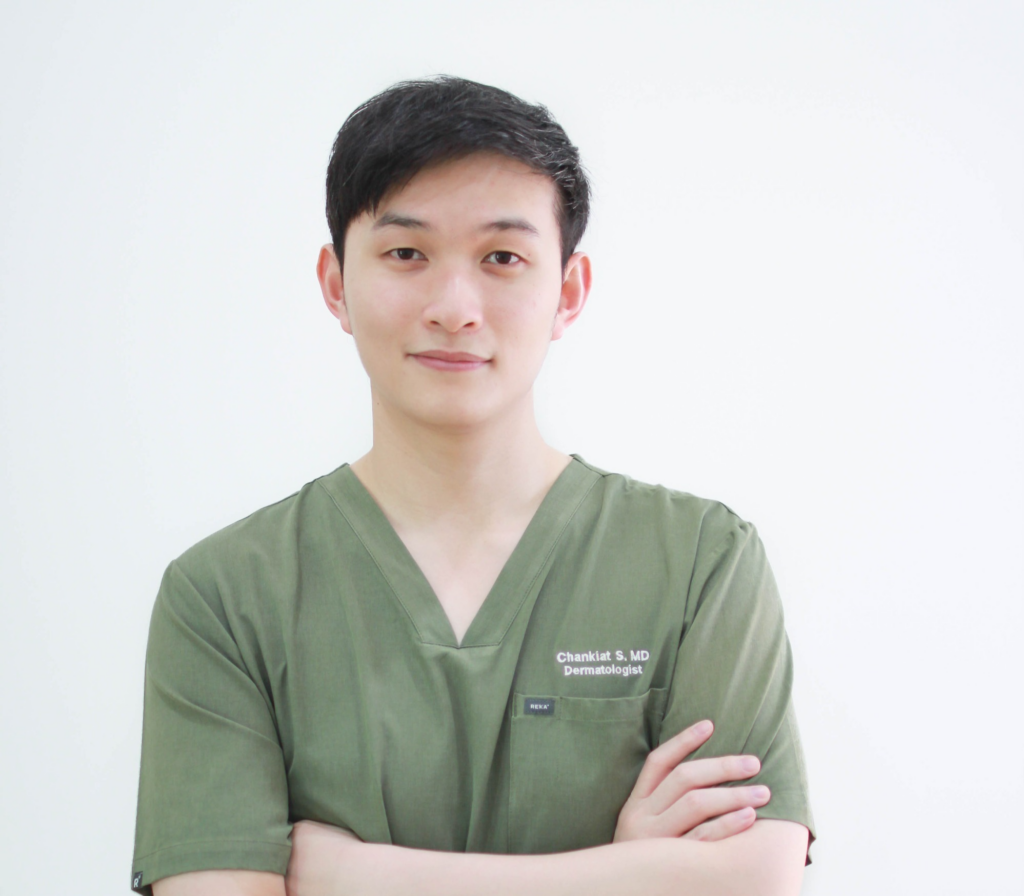
A Message from Dr. Bank
I want to remind everyone struggling with sensitive skin that damaged skin can regain its strength as long as it is treated accurately, with the right diagnosis and the right approach. If you have been dealing with a chronic, long-standing skin condition and want to heal or keep your flare-ups properly under control without feeling stressed every morning when you look in the mirror I encourage you to consult a board-certified dermatologist.
I would love to be a part of helping you regain your confidence, embrace the sunshine with a smile, and live your life to the fullest once again.
22 Square Clinic : The Home of Skin Expertise.
เพราะความงามของคุณ สมควรได้รับการดูแลจากบ้านที่เข้าใจผิวของคุณที่สุด
Because your beauty deserves a home